
Search engines have evolved far beyond simple keyword matching. Today, ranking on Google requires websites that are technically optimized, fast, well-structured, and easily crawlable by search engine bots. This is where technical SEO services in Dubai become critical.
For businesses operating in competitive markets like Dubai, technical SEO can be the difference between appearing on page one of Google or remaining invisible to potential customers. Even websites with excellent content may struggle to rank if their technical foundation is weak.
Technical SEO for beginners focuses on optimizing the backend infrastructure of a website so search engines can efficiently crawl, index, and understand its content.
In this guide, we’ll explore the key components of technical SEO in Dubai, including website architecture, crawlability, Core Web Vitals, schema markup, and indexation management. Whether you’re new to SEO or looking to improve your technical optimization strategy, this roadmap will help you build a website that ranks.
What is Technical SEO?
Technical SEO in Dubai refers to the process of optimizing a website’s infrastructure so that search engines can crawl, index, and render pages efficiently.
While content and backlinks influence rankings, technical SEO ensures that search engines can properly access and interpret that content.
Key elements of technical SEO include:
- website architecture
- page speed optimization
- mobile responsiveness
- structured data
- crawlability
- indexation management
- secure HTTPS protocols
Without proper technical optimization, even high-quality content may struggle to achieve strong search rankings.
For businesses competing in the UAE market, implementing a strong technical SEO strategy ensures that search engines can evaluate websites accurately and deliver them to the right audience.
Companies looking for advanced implementation can also explore professional technical SEO services in Dubai to conduct detailed audits and performance improvements.
Website Architecture
Website architecture refers to the way pages are structured and linked together within a website.
A well-organized site structure helps both users and search engines understand the relationship between different pages.
Poor architecture can cause issues such as:
- pages not being indexed
- Search engines are struggling to crawl the site
- low page authority distribution
- Poor user navigation
A strong website architecture typically follows a hierarchical structure.
Example structure:
Homepage
↓
Category Pages
↓
Subcategory Pages
↓
Content or Product Pages
This structure ensures that important pages remain easily accessible.
Internal Linking Strategy
Internal linking is a key element of website architecture. Proper internal linking helps distribute page authority across the website and guides search engines to important content.
For example, a technical SEO guide might internally link to a service page such as:
SEO Company in Dubai
Internal links provide context and strengthen topical authority across the website.
Flat vs Deep Site Structure
Search engines prefer a flat site structure, where important pages are accessible within 3 clicks from the homepage.
Example:
Homepage → Blog → Technical SEO Guide
Instead of:
Homepage → Resources → Blog → SEO Guides → Technical → Article
A flat structure ensures faster crawling and improved indexation.
Crawlability Optimization
Search engines use bots (Googlebot) to crawl websites and discover content. Crawlability refers to how easily search engines can navigate and access the pages of your website.
If search engines cannot crawl your site effectively, your pages may never appear in search results.
Robots.txt Configuration
The robots.txt file tells search engines which pages they are allowed or not allowed to crawl.
Example robots.txt:
User-agent: *
Disallow: /admin/
Allow: /
Improper robots.txt configuration can accidentally block search engines from accessing important pages.
XML Sitemaps
XML sitemaps provide search engines with a structured list of all important pages on a website.
Benefits of XML sitemaps include:
- faster content discovery
- improved indexing
- easier crawling of large websites
Sitemaps should be submitted through Google Search Console.
Crawl Budget Optimization
Large websites often face crawl budget limitations. Crawl budget refers to the number of pages search engines crawl within a given timeframe.
Optimizing crawl budget involves:
- removing duplicate pages
- fixing broken links
- improving internal linking
- minimizing unnecessary redirects
These improvements ensure search engines prioritize important pages.
Core Web Vitals
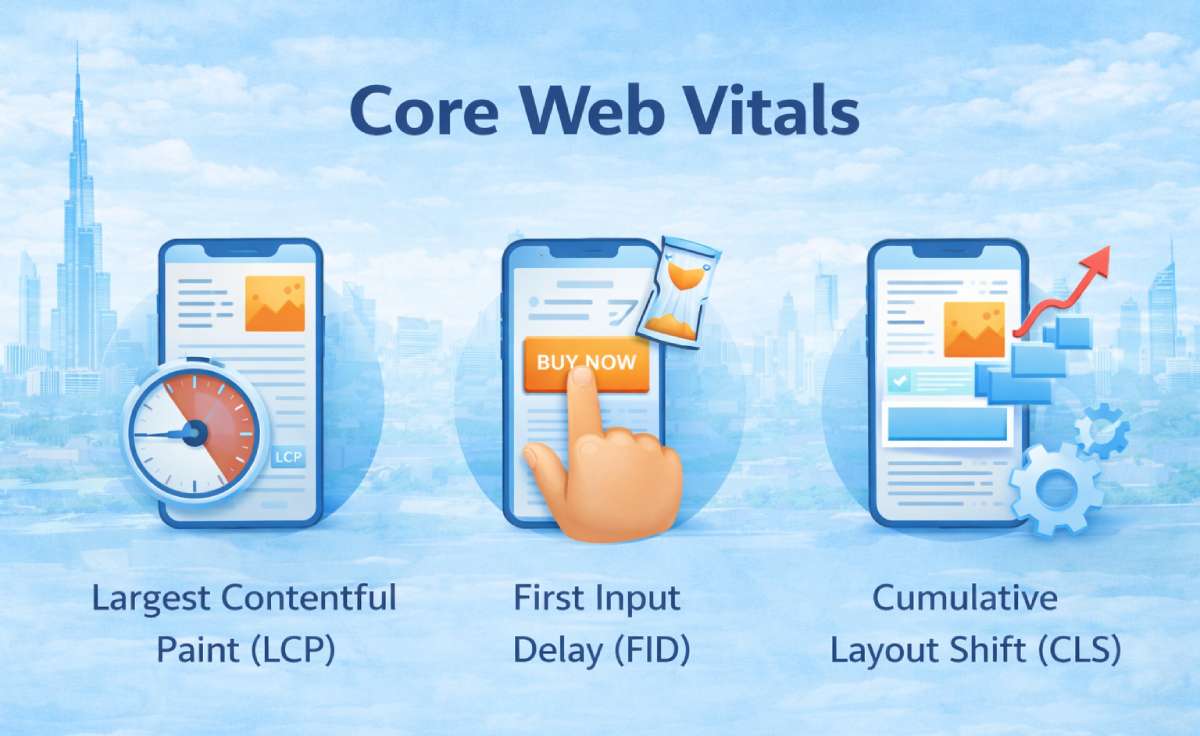
Core Web Vitals are performance metrics introduced by Google to measure user experience on websites.
They evaluate how fast, stable, and responsive a webpage is. The three main Core Web Vitals metrics include:
Largest Contentful Paint (LCP)
LCP measures how long it takes for the main content of a page to load.
Recommended value:
Under 2.5 seconds
First Input Delay (FID)
FID measures how quickly a page responds when users interact with it.
Recommended value:
Less than 100 milliseconds
Cumulative Layout Shift (CLS)
CLS measures how much page elements shift while loading.
Recommended value:
Less than 0.1
Improving Core Web Vitals typically involves:
- optimizing images
- Reducing server response time
- implementing lazy loading
- minimizing JavaScript
Fast websites improve both search rankings and user experience.
Schema Markup
Schema markup is structured data added to websites to help search engines understand the content more effectively.
It provides additional context about elements such as:
- business information
- product details
- reviews
- events
- articles
Schema markup allows websites to appear with rich results in search listings.
Examples of rich results include:
- star ratings
- FAQs
- product prices
- event details
Common Schema Types
Some commonly used schema types include:
Organization Schema
Provides information about a company, including name, logo, and contact details.
Article Schema
Helps search engines understand blog content.
Product Schema
Used by ecommerce websites to show pricing and availability.
FAQ Schema
Displays question-and-answer sections directly in search results.
Adding schema markup improves search visibility and click-through rates.
Indexation Issues
Indexation refers to the process of search engines storing pages within their search index.
If a page is not indexed, it cannot appear in search results. Several issues can prevent pages from being indexed.
Noindex Tags
Pages with a noindex tag instruct search engines not to include them in search results.
Example:
<meta name=”robots” content=”noindex”>
Developers sometimes accidentally apply this tag to important pages.
Duplicate Content
Duplicate content occurs when multiple pages contain similar content. Search engines may struggle to determine which version should be indexed. technical seoCanonical tags help resolve duplicate content issues.
Example:
<link rel=”canonical” href=”https://example.com/main-page”>
Thin Content
Pages with little or no useful information may not be indexed by search engines.
Adding valuable content improves indexation chances.
URL Parameters
Dynamic URL parameters can generate multiple variations of the same page.
Example:
example.com/product?color=blue
example.com/product?color=red
Proper canonicalization ensures search engines treat these pages correctly.
Technical SEO Audit Checklist
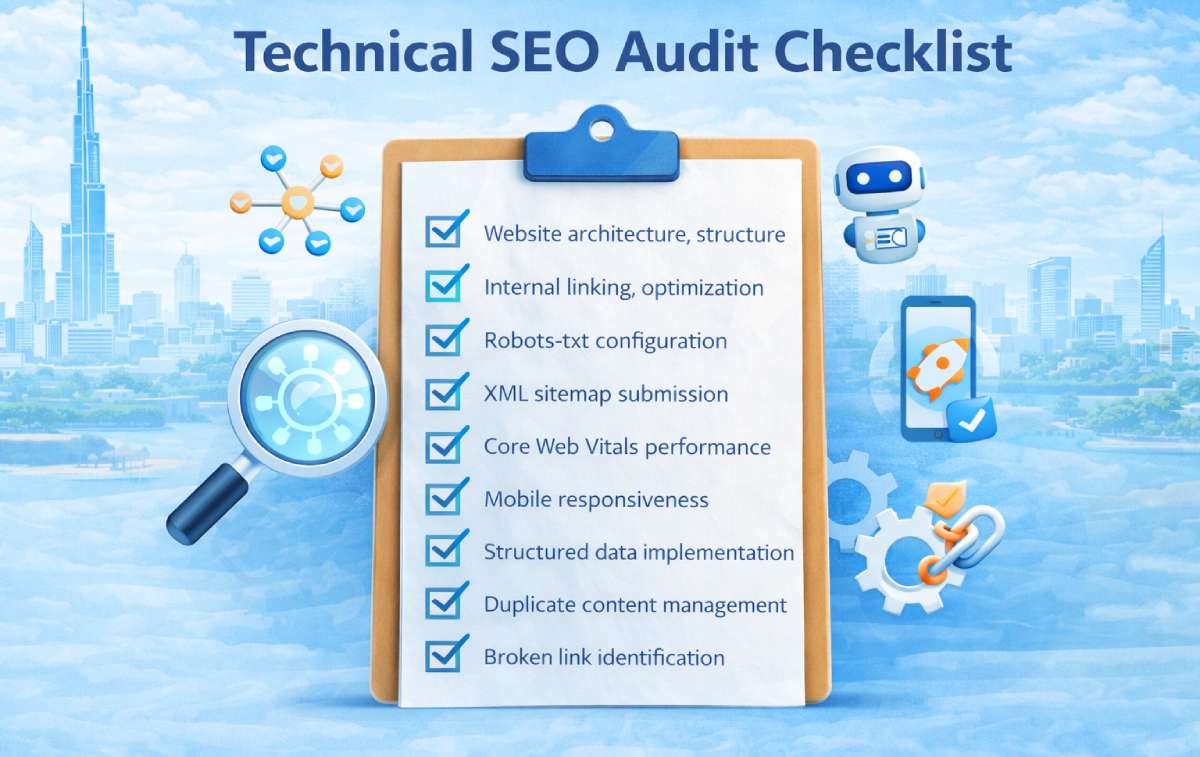
Businesses performing a technical SEO audit should evaluate several key areas.
Checklist:
- Website architecture, structure
- Internal linking, optimization
- Robots.txt configuration
- XML sitemap submission
- Core Web Vitals performance
- Mobile responsiveness
- Structured data implementation
- Duplicate content management
- Broken link identification
Conducting regular technical SEO audits ensures websites remain optimized as search algorithms evolve.
How Ideamagix Helps Businesses Implement Technical SEO in Dubai
Technical SEO requires deep expertise in website development, search engine algorithms, and performance optimization.
At Ideamagix, we help businesses identify technical issues that limit search visibility and implement solutions that improve website performance.
Our technical SEO services include:
- comprehensive technical SEO audits
- Core Web Vitals optimization
- structured data implementation
- crawl budget optimization
- advanced website architecture planning
These improvements help businesses build a strong foundation for long-term organic growth.
Companies seeking broader search visibility strategies can also explore our detailed guide on SEO Company in Dubai, where we explain how technical SEO for beginners integrates with content and link-building strategies.
Technical SEO Tips for Beginners
For businesses new to SEO, implementing a few fundamental technical improvements can significantly improve search visibility.
Key technical SEO tips include:
- Ensure your website uses HTTPS encryption
- Optimize page speed using image compression
- Create and submit an XML sitemap
- Fix broken links and crawl errors
- Implement structured data markup
- Use a mobile-friendly website design
Even small technical improvements can create noticeable improvements in search performance.
Frequently Asked Questions About Technical SEO
What is technical SEO?
Technical SEO focuses on optimizing website infrastructure so that search engines can crawl, index, and render content effectively.
Why is technical SEO important?
Technical SEO ensures that search engines can access and understand your website, which directly affects rankings.
How often should technical SEO audits be performed?
Most websites should perform technical SEO audits every 3–6 months to identify issues affecting search performance.
Is technical SEO different from on-page SEO?
Yes. Technical SEO focuses on backend optimization, while on-page SEO focuses on content and keyword optimization.