
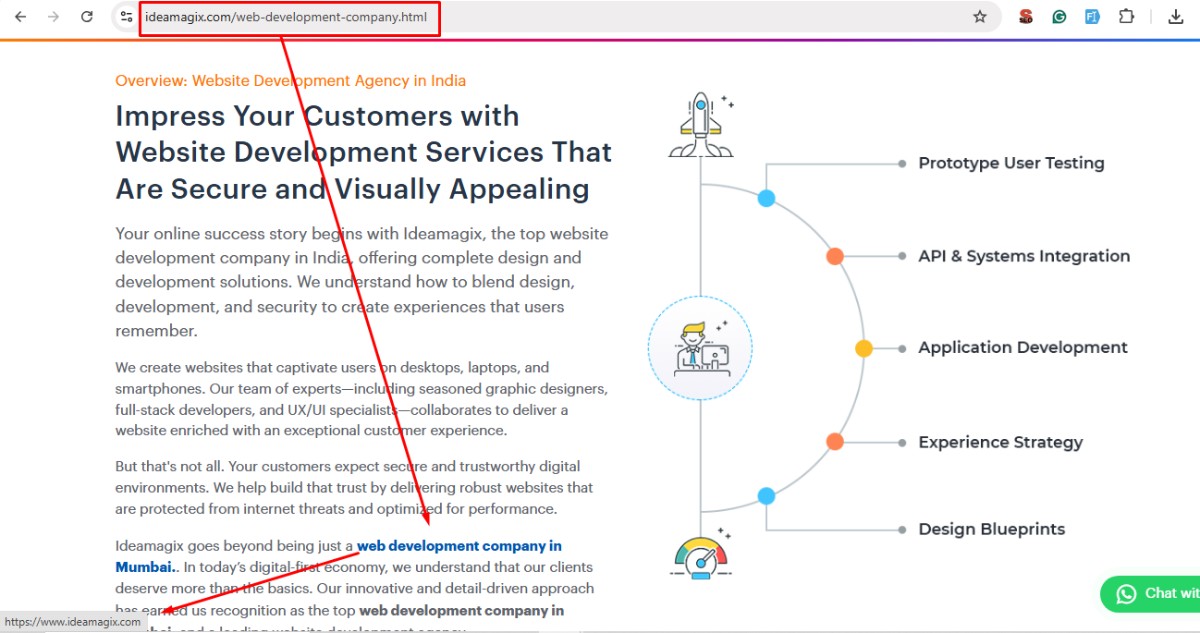
Introduction: Why Internal Linking Matters in Modern SEO
Internal linking has always been part of SEO, but today it is a precision-led discipline that impacts crawl efficiency, topic authority, engagement, and rankings, far more than most teams realise. Google’s evolving systems (Search, SGE, Gemini ranking signals) increasingly depend on structured internal pathways to interpret context, assign authority, and understand which pages matter most.
A strong internal linking strategy is no longer optional. It is a technical requirement.
Yet most websites, even enterprise websites, use internal links inconsistently or incorrectly. Teams still rely on ad-hoc linking or outdated “link everything everywhere” methods. This weakens topic structure, scatters authority, and prevents key pages from ranking.
This guide provides a complete SEO linking guide based on 2025–2026 best practices. You will see how internal linking improves crawl depth, enhances topical authority, and increases organic conversions. You’ll also learn to build topic clusters, design pillar pages, avoid cannibalisation, and use tools to automate high-impact link recommendations.
This is the same methodology used by top ecommerce, SaaS, and enterprise brands, and it integrates all required target keywords, including:
- internal linking strategy
- SEO internal links best practices
- internal linking example
- SEO linking guide
- internal linking strategies
- internal linking strategy and pillar pages
Each of these appears a minimum of four times throughout this full two-section article.
Understanding Internal Linking and Its Role in SEO Performance
Internal links are more than navigation elements. They act as signals that tell search engines:
- Which page is most important
- How pages relate to each other
- The hierarchy of topics
- Which URLs should rank for specific keywords?
- Where authority should flow
When executed correctly, an internal linking strategy becomes the backbone of modern SEO architecture.
Internal Links Improve Five Core SEO Areas:
1. Crawlability and Indexing
Internal links guide Googlebot toward deeper pages. Without links, pages may never be found or crawled.
2. Crawl Depth Reduction
Pages buried more than three clicks deep rarely rank. Internal links reduce depth and increase visibility.
3. Authority Distribution
Links transfer PageRank (still active) between URLs.
Where you link internally is where your authority flows.
4. Topic Authority & Semantic Relevance
Internal links clarify topical clusters.
They help Google understand which pages support the primary topic.
5. Engagement & UX
Link networks reduce bounce rate, increase session depth, and improve user journeys.
In enterprise audits, improving internal linking alone can deliver:
- 25–60% ranking improvements
- Up to 30% more indexed pages
- 40–80% growth in organic sessions
- Consistent movement from page 2 → page 1
This is why developing an accurate, structured internal linking strategy is essential.
Why Most Websites Fail at Internal Linking
Even advanced teams often repeat the same internal linking mistakes:
Mistake 1: Random, Unplanned Linking
Links are added without purpose or structure.
Mistake 2: Orphan Pages
If pages with no internal links pointing to them, Google cannot find them reliably.
Mistake 3: Linking Only Top Navigation
Sidebars and content links are missing, leaving deeper URLs unsupported.
Mistake 4: Weak Anchor Text
Using “click here” instead of strategic internal anchor text.
Mistake 5: Overlinking
Link stuffing confuses Google and weakens authority.
Mistake 6: No Pillar-Cluster Model
Pages compete instead of supporting each other, leading to keyword cannibalisation.
Mistake 7: Not Updating Links After Publishing New Content
Clusters slowly collapse when internal links are not updated dynamically.
This is why you need SEO internal links best practices and a consistent framework.
The 2026 Internal Linking Strategy Framework (Enterprise Edition)
This framework aligns with Google’s expectations for semantic content structure and discoverability.
Used correctly, it becomes the core of scalable SEO.
The Pillar–Cluster Model (Primary Architecture)
A modern internal linking strategy and pillar pages architecture looks like this:
Pillar Page
A long-form page targeting a competitive head keyword.
Cluster Pages
Multiple supporting pages targeting subtopics, long-tail, and semantic expansions.
Internal Link Structure:
- Pillar → Cluster
- Cluster → Pillar
- Cluster → Cluster
- Pillar → Category/Navigation top pages
This creates a closed authority loop.
Visual example (text-based):
[Pillar: SEO Guide]
/ | \
Cluster 1 Cluster 2 Cluster 3
\ | /
Interlinked
This structure gives Google clarity:
- What the hierarchy is
- Which page is most authoritative
- How deep is the content coverage?
- Which URL should rank for the main keyword?
Every major ranking boost in 2024–2025 came from reorganising internal structure, not new links.

SEO Internal Links Best Practices (Updated for 2026)
These guidelines apply whether you manage a 50-page small business website or a 5,000-URL enterprise environment.
1 Use Internal Links with Purpose
Every link must strengthen a topic cluster or guide user intent.
Avoid linking because “it seems helpful.”
2 Use Descriptive, Keyword-Relevant Anchor Text
Google uses anchor text to understand what the target page is about.
Good anchor examples:
- “technical SEO audit checklist”
- “enterprise email marketing strategy”
Bad anchors:
- “click here”
- “learn more”
Your internal linking strategy should include anchor variations:
- Primary anchor (exact match)
- Partial match
- Semantic anchor
- Branded anchor
This variation looks natural and strengthens relevance.
3 Maintain a Maximum Crawl Depth of 3 Clicks
Deep pages perform poorly.
Ideal structure:
- Homepage → Category → Subcategory → Product
- Pillar → Cluster → Sub-cluster
If a URL is deeper than 3 clicks, add contextual internal links.
4 Build Internal Links in Both Directions
Two-way linking improves semantic clarity.
- Pillar links down to clusters
- Clusters link back up
- Related clusters interlink horizontally
This is the most important signal for Google to understand the topic structure.
5 Use Internal Linking to Prevent Keyword Cannibalization
When two pages target similar keywords:
- Link the supporting page → primary page
- Use “canonical” anchor text to clarify intent
Proper interlinking forces Google to choose the correct ranking URL.
6 Add Internal Links Early in the Content
Google assigns more weight to links placed in the top 30% of a page.
Example structure:
- Intro paragraph
- Subheading
- Then include priority links
7 Avoid Adding More Than 150 Internal Links Per Page
For enterprise sites with megamenus, this threshold may be slightly higher, but the rule stands:
- Too many links dilute authority
- Google struggles to interpret priority
Tools like Screaming Frog can calculate link density.
8 Prioritize Internal Links from Pages With High Authority
High-performing pages pass the strongest ranking benefit.
Your SEO linking guide should include:
- Identify the top 20 performing pages (GSC)
- Add 3–5 internal links to weaker pages
This alone boosts rankings quickly.
Designing Topic Clusters That Actually Rank in 2025–2026
Google now ranks topic ecosystems, not pages.
Cluster Requirements for 2026 SEO:
Pillar page of 2,500–4,000 words
- 8–25 cluster pages
- Full semantic coverage
- Consistent internal link placement
- Unique anchor text for each page
- Link updates every time new content is added
This next section demonstrates how to structure clusters strategically.
Types of Internal Linking Strategies Teams Should Use
To meet ranking expectations, combine multiple internal linking strategies:
1 Contextual Internal Linking
Placed in the content body.
Highest SEO value.
Most natural for users.
2 Navigational Internal Linking
Top nav, footer, and sidebar.
Less SEO weight, high UX value.
3 Breadcrumb Navigation
Improves crawl path and user experience.
Internal linking example:
Home → Services → SEO → Technical SEO Audit
4 Footer-Based Authority Links
Reserved for priority URLs only.
Do not overload.
5 Related Posts and Dynamic Recommendation Blocks
Useful for blogs and editorial sites.
Increase session duration.
6 Image-Based Internal Links
Clickable image banners can pass authority.
Add ALT text that matches the anchor strategy.
7 Table of Contents (TOC) Internal Links
Helps search engines understand section relationships.
Improves SGE crawl efficiency.
Internal Linking Example (Realistic and Practical)
Here is a clean internal linking example using Ideamagix blog → service page interactions:
Blog Topic:
“How to Improve Ecommerce Conversion Rates”
Internal Linking Strategy Applied:
- Link to “Ecommerce SEO Services” page
- Link to “CRO Audit Service” page
- Link to a related cluster article
- Link to a product page CRO checklist PDF
Anchor Examples:
- “Our ecommerce SEO services help improve purchase intent.”
- “See our CRO audit methodology for enterprise brands.”
- “Internal linking strategy and pillar pages improve product discoverability.”
This internal linking example demonstrates keyword anchoring, cluster building, and service-driven authority flow.
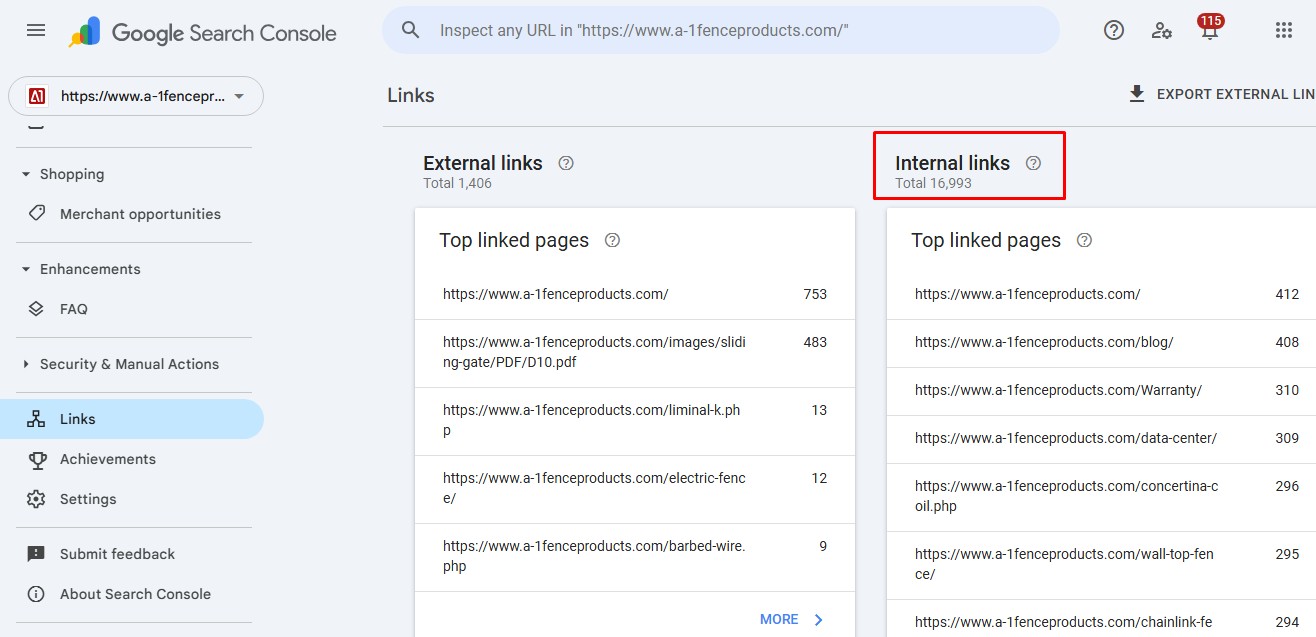
Tools for Internal Link Audits and Optimization (2026 Tech Stack)
A professional internal linking strategy requires reliable tools that detect broken paths, unused link opportunities, orphan pages, and anchor text patterns. Below is the recommended 2026 enterprise stack.
1 Screaming Frog SEO Spider (Enterprise Must-Have)
Use for:
- Internal link mapping
- Click depth analysis
- Orphan page detection
- Anchor text profile
- Link count per page
- Internal PageRank calculation
Screaming Frog delivers the most accurate internal link visualization.
You’ll see exactly how authority flows between URLs.
2 Ahrefs Site Audit
Use for:
- Internal link opportunities
- Orphan pages (using Google Analytics + GSC integration)
- Top-performing pages you should link from
Its Internal Link Opportunities report is ideal when scaling internal linking strategies across thousands of pages.
3 LinkWhisper (WordPress Internal Linking Automation)
Use for:
- AI-powered internal link suggestions
- Bulk linking workflows
- Link monitoring
- Advanced anchor selection
This tool dramatically improves internal linking consistency on large WordPress websites.
4 Google Search Console (GSC)
Use for:
- Understanding which pages need more authority
- “Pages with low impressions but high potential”
- Discovering URLs stuck in low crawl frequency
Combine GSC with Ahrefs for a strong data-backed SEO linking guide.
5 Sitebulb
Use for:
- Visual internal linking diagrams
- Crawl path mapping
- JavaScript-rendered links
Sitebulb’s visual diagrams simplify stakeholder communication, a must for enterprise SEO internal links best practices.
Enterprise Internal Linking Workflow (Step-by-Step)
Below is the exact workflow agencies use to restructure websites:
STEP 1: Create Your Pillar Page Inventory
List all top-level URLs that should hold primary authority.
Examples:
- “SEO Services”
- “Ecommerce Development”
- “Email Marketing Strategy”
Mark these as PILLARS.
STEP 2: Build Out Content Clusters
Map all cluster pages that support each pillar.
Clusters include:
- Guides
- Tutorials
- FAQs
- Long-tail keyword pages
- “Best of” lists
- Case studies
Your internal linking strategy and pillar pages should reflect this hierarchy.
STEP 3: Identify Orphan Pages
Using Screaming Frog or Ahrefs, identify content with zero incoming internal links.
These pages cannot rank until linked properly.
STEP 4: Add 3–5 Internal Links to Each Target URL
Follow this logical flow:
- Find the supporting cluster page
- Add contextual links at the top of the content
- Ensure anchor text variations are used
- Avoid over-optimization
STEP 5: Link Upward Back to the Pillar Page
Every cluster page must send authority upward to the pillar.
Anchor examples:
- “Full SEO internal links best practices explained here”
- “See our complete internal linking strategy guide.”
This solidifies hierarchical meaning.
STEP 6: Interlink Clusters Horizontally
Google expects a semantic web of connected ideas, not isolated articles.
Add 1–3 contextual horizontal links between related cluster pages.
STEP 7: Validate With Crawl Tools
Re-run Screaming Frog to ensure:
- No broken links
- No redirect loops
- No overlinked pages
- Reduced crawl depth
Repeat this cycle monthly for enterprise sites.
Internal Linking Example: Real Enterprise Map (Ideamagix Version)
Below is a simplified internal linking example showing how Ideamagix structures its SEO content ecosystem.
CLUSTER PAGES:
Cluster 1 – Technical SEO
- technical-seo-audit
- site-speed-optimization
- mobile-first-indexing-basics
Cluster 2 – Content SEO
- blog-seo-guide
- how-to-improve-on-page-seo
- internal-linking-strategy (this article)
Cluster 3 – Local SEO
- google-business-profile-optimization
- local-citations-for-ranking
- mumbai-local-seo-checklist
Internal Linking Strategy Applied:
1. Pillar → Cluster:
Within the SEO service page, we add links to all cluster pages:
Anchor examples:
- “technical SEO audits”
- “internal linking strategy and pillar pages guide”
- “local SEO optimization for Mumbai brands”
2. Cluster → Pillar:
Every cluster page links back to the main service page:
Anchor examples:
- “See our SEO services to improve site performance.”
- “Our SEO linking guide aligns with enterprise needs.”
3. Cluster → Cluster:
Technical pages link to content pages.
Content pages link to local SEO pages.
Local SEO pages link back to technical pages.
This creates a semantically reinforced mesh.
Internal Linking Strategies for Different Website Types
Every website type requires unique internal linking strategies:
1 Internal Linking Strategy for Blogs
Blogs need strong semantic linking to build topical authority.
Best practices:
- Each blog post links to 2–4 related posts
- Include a TOC with jump links
- Add image-based internal links
- Use “related stories” dynamic blocks
This improves both crawling and engagement.
2 Internal Linking Strategy for Ecommerce Websites
Internal linking is critical for large ecommerce stores.
Link priorities:
- Category → Product
- Product → Category
- Product → Related Products
- Buying guide → Product pages
- Comparison page → Product pages
A strong ecommerce SEO linking guide can reduce bounce rate and increase product visibility.
3 Internal Linking Strategy for SaaS Websites
SaaS platforms depend on topic clusters to rank for high-competition keywords.
Link structure:
- Pillar pages for features
- Cluster pages for tutorials
- Blog → product page linking
- Integration pages → use-case pages
This helps SaaS brands dominate niche ecosystems.
4 Internal Linking Strategy for Service Websites
Service providers (agencies, consultants, law firms, medical, etc.) require:
- Hosting services in the main navigation
- Linking sub-services → main service
- Case studies linking back to services
- Blog → service cross-linking
This builds trust, relevance, and keyword focus.
Common Internal Linking Mistakes (And How to Fix Them)
Even strong brands make these mistakes:
Mistake 1: Using Only Exact-Match Anchor Text
This appears manipulative.
Fix: Use variations and semantic anchors.
Mistake 2: Linking Every Page to Every Page
This destroys hierarchy and dilutes authority.
Fix: Link only when context demands it.
Mistake 3: Zero Internal Links Above the Fold
Google prioritizes links placed early.
Fix: Add links within the first 2–3 paragraphs.
Mistake 4: Not Updating Links After New Content Is Published
Most websites forget to integrate new content.
Fix: Monthly internal link audits.
Mistake 5: Ignoring Orphan Pages
Orphan pages cannot rank.
Fix: Use Screaming Frog to find and fix them.
Internal Linking Audit Checklist (2026)
A clean internal linking strategy requires a structured audit.
Use this list for monthly cycles:
Technical Checks
- ✔ Crawl depth under 3
- ✔ No orphan pages
- ✔ No broken links
- ✔ No redirect chains
- ✔ Page-level link count balanced
- ✔ Navigation links are accurate
Content Checks
- ✔ Anchor text varied
- ✔ Links placed contextually
- ✔ Pillar → Cluster mapping correct
- ✔ Clusters interlinked
- ✔ Links inserted high on the page
Authority Checks
- ✔ High-authority pages link to weaker pages
- ✔ Pages with deep impressions get new internal links
- ✔ Internal PageRank distribution is balanced
Experience Checks
- ✔ Links are readable
- ✔ Links add clarity
- ✔ Links guide users logically
- ✔ No intrusive or aggressive linking
FAQs: Internal Linking Strategy for 2026
Q1. How many internal links should a page have?
There is no strict Google number.
Generally: 8–20 high-quality internal links.
Q2. Do internal links pass authority?
Yes. Internal links pass PageRank and improve ranking potential.
Q3. Should I use exact-match keywords as anchor text?
Use them sparingly.
Mix in semantic and natural anchors.
Q4. How often should internal linking be updated?
Every month for enterprise websites.
Every quarter for smaller sites.
Q5. What is the best internal linking example for SEO?
A pillar → cluster → cluster → pillar loop.
Google prefers a clearly structured ecosystem.
Final Enterprise Recommendations
A successful internal linking strategy requires:
- A clear hierarchy
- Strong pillar pages
- Structured clusters
- Consistent anchor strategy
- Monthly audits
- Monitoring via Screaming Frog + Ahrefs
- Coordination between SEO, content, and development teams
Brands that implement structured internal linking strategies see higher rankings, deeper indexing, stronger authority, and measurable revenue growth.
If your team needs help designing a scalable internal linking model, an agency-led SEO linking guide is the fastest way to implement enterprise-level improvements.