
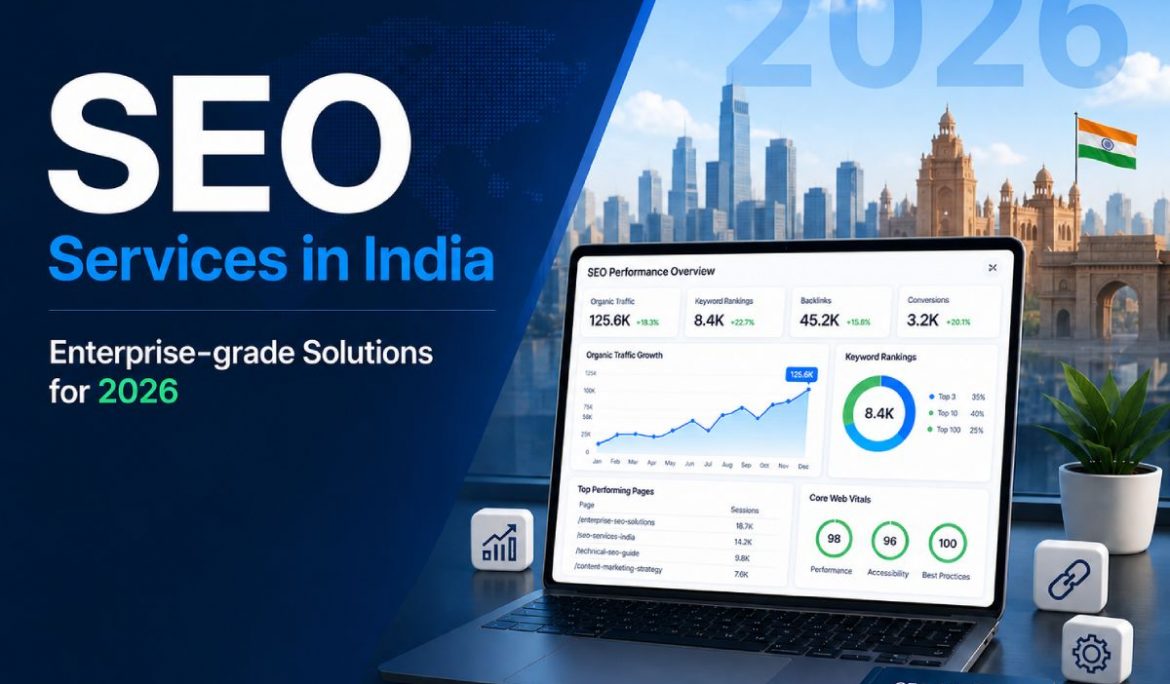
India has rapidly evolved into one of the most competitive digital markets globally. With businesses across industries investing heavily in online visibility, SEO is no longer just about ranking keywords; it has become a strategic growth engine that drives traffic, leads, and revenue at scale.
For startups, SMEs, and especially enterprise organizations, choosing the best SEO services in India is not simply about hiring an agency; it’s about partnering with a team that understands:
- large-scale website architecture
- multilingual audiences
- international markets
- technical SEO complexity
- long-term growth strategy
In 2026, SEO is deeply integrated with user experience, AI-driven search behavior, and data analytics. Businesses that fail to adopt enterprise-level SEO strategies risk losing visibility to competitors who invest in structured, scalable systems.
This guide explores:
- What defines professional SEO services in India
- enterprise SEO capabilities and frameworks
- multilingual and international SEO strategies
- technical SEO at scale
- How to choose the right SEO partner
What Are Professional SEO Services in India?
Professional SEO services in India have evolved far beyond traditional practices like basic keyword placement and backlink acquisition. In today’s competitive digital landscape, SEO is a multi-layered discipline that combines technical expertise, content strategy, user experience, and data-driven decision-making to drive sustainable growth.
At an enterprise level, SEO is not treated as a checklist of tasks—it is approached as a long-term growth system. This means aligning SEO efforts with broader business goals such as lead generation, customer acquisition, and revenue growth. Every optimization, whether technical or content-driven, is designed to contribute to measurable outcomes.
What truly defines professional SEO services is the ability to operate at scale while maintaining precision. For example, optimizing a 20-page website is fundamentally different from managing SEO for a platform with thousands of pages across multiple regions and languages. The complexity increases exponentially, requiring structured frameworks, advanced tools, and continuous monitoring.
In India, where competition is high and search behavior varies across regions, professional SEO services must also account for local nuances, multilingual audiences, and industry-specific dynamics. Businesses that invest in this level of SEO gain a significant advantage, not just in rankings, but in overall digital visibility and market share.
Core Components of Professional SEO
A high-quality SEO service is built on multiple interconnected components that work together to improve visibility, user experience, and conversions. Each component plays a specific role, and the effectiveness of SEO depends on how well these elements are integrated.
Technical SEO Audits and Implementation
Technical SEO forms the backbone of any successful SEO strategy. Without a strong technical foundation, even the best content and backlinks cannot perform effectively.
A comprehensive technical audit includes:
- identifying crawl errors and broken links
- improving site speed and Core Web Vitals
- optimizing mobile responsiveness
- ensuring proper indexing of important pages
However, the real value lies in implementation. Many businesses conduct audits but fail to execute recommendations effectively. Professional SEO services focus not just on identifying issues but on resolving them in a scalable and sustainable way.
Keyword Research Aligned with Search Intent
Modern SEO is no longer about targeting high-volume keywords; it’s about understanding why users are searching.
Professional keyword research involves:
- mapping keywords to different stages of the customer journey
- identifying long-tail opportunities with high conversion potential
- clustering keywords based on intent
For example, a user searching for “what is SEO” has informational intent, while someone searching for “SEO services in India” is ready to convert. Treating these queries the same leads to poor results.
Intent-driven keyword research ensures that content aligns with user expectations, which improves both rankings and conversions.
Content Strategy and Production
Content is the primary driver of organic growth, but only when it is structured and strategic.
Professional SEO services focus on building content ecosystems, not isolated blog posts.
This includes:
- pillar pages targeting core topics
- cluster content supporting those topics
- internal linking structures that distribute authority
Content is also tailored to user intent, ensuring that it provides value at every stage, from awareness to decision-making.
In competitive markets like India, generic content does not perform. Businesses need deep, authoritative, and well-structured content to stand out.
On-Page and Off-Page Optimization
On-page SEO ensures that each page is optimized for both search engines and users.
This includes:
- title tags and meta descriptions
- heading structure
- internal linking
- content optimization
Off-page SEO, on the other hand, focuses on building authority through backlinks and brand mentions. However, professional SEO services go beyond basic link building. They focus on acquiring high-quality, relevant links that improve domain authority and credibility.
The combination of strong on-page optimization and strategic off-page efforts creates a solid foundation for ranking improvements.
Analytics and Performance Tracking
SEO without data is guesswork. Professional SEO services rely heavily on analytics to measure performance and guide decision-making.
Key metrics include:
- organic traffic growth
- keyword rankings
- user behavior (bounce rate, time on site)
- conversions and revenue
Advanced reporting goes a step further by connecting SEO performance to business outcomes. This allows companies to understand not just how much traffic they are getting, but how that traffic contributes to growth.
Difference Between Basic SEO and Professional SEO
One of the biggest misconceptions in the market is that all SEO services are the same. In reality, the difference between basic and professional SEO is significant.
| Factor | Basic SEO | Professional SEO |
| Keyword Targeting | Focus on volume | Intent-driven + clustering |
| Technical SEO | Limited fixes | Advanced optimization (CWV, logs, indexing) |
| Content | Occasional blogs | Structured content ecosystem |
| Scale | Small websites | Enterprise-level scalability |
| ROI Focus | Traffic growth | Revenue + conversions |
Basic SEO often delivers short-term improvements but struggles to sustain growth. Professional SEO, on the other hand, is designed to compound results over time by building authority, improving user experience, and aligning with search engine algorithms.
Key Insight:
Professional SEO is not about isolated activities; it is about building a scalable growth engine where technical optimization, content, and authority work together to drive consistent results.
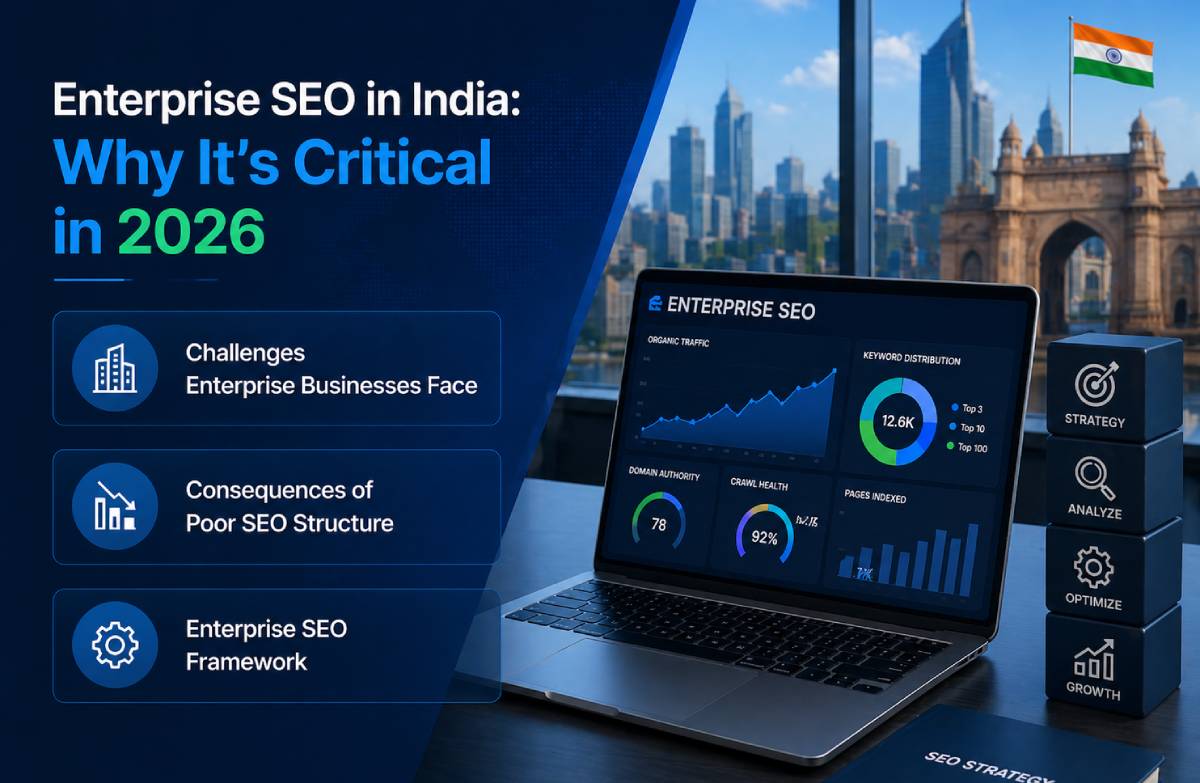
Enterprise SEO in India: Why It’s Critical in 2026
As businesses scale, their SEO challenges become more complex. Enterprise SEO is specifically designed to address these challenges and ensure that large websites can maintain and improve their search visibility.
Challenges Enterprise Businesses Face
Enterprise-level websites often deal with complexities that smaller businesses never encounter. Managing thousands of pages is one of the biggest challenges. Each page needs to be optimized, indexed, and maintained, which requires structured systems and automation.
Optimizing for multiple regions and languages adds another layer of complexity. Businesses must ensure that the right content is shown to the right audience without creating duplicate content issues.
Crawl efficiency is another critical factor. Search engines allocate a limited crawl budget to each website, and inefficient structures can result in important pages being ignored. Complex site structures, such as large e-commerce platforms or enterprise portals, make it difficult to maintain consistency across pages.
Finally, aligning SEO with business goals is often overlooked. Enterprise SEO must go beyond rankings and focus on metrics like leads, conversions, and revenue.
Consequences of Poor SEO Structure
Without a structured approach, enterprise websites face several issues:
- indexing problems that prevent pages from appearing in search results
- duplicate content that confuses search engines
- poor rankings due to weak optimization
- wasted crawl budget on low-value pages
These issues not only affect visibility but also impact overall business performance.
Enterprise SEO Framework
To manage complexity, enterprise SEO requires a structured framework:
Technical Foundation
- Content Strategy
- Authority Building
- Performance Optimization
- Conversion & ROI Tracking
The technical foundation ensures that the website is accessible and optimized for search engines. Content strategy drives visibility and engagement, while authority building strengthens domain credibility.
Performance optimization focuses on improving user experience and technical metrics, and conversion tracking ensures that SEO efforts translate into business results. This framework allows enterprises to scale their SEO efforts without losing control or efficiency.
Multi-Lingual SEO: Reaching Diverse Indian Audiences
India’s linguistic diversity presents both a challenge and an opportunity for businesses. With hundreds of languages and regional variations, relying solely on English content limits reach significantly.
Why Multilingual SEO Matters
Search behavior in India is rapidly evolving. More users are searching in their native languages, especially with the rise of voice search and mobile usage.
Users also tend to trust content in their preferred language, which leads to higher engagement and better conversion rates. Another key advantage is lower competition. Many businesses still focus only on English keywords, leaving regional languages underserved.
Example of Search Intent Variation
Consider the difference between:
- English: “best insurance plans India.”
- Hindi: “भारत में सबसे अच्छे बीमा योजना”
While both queries appear similar, the intent and audience context can vary. Regional language users may have different expectations, preferences, and decision-making behaviors.
Understanding these nuances is critical for effective multilingual SEO.
Multilingual SEO Strategy
A successful multilingual SEO strategy involves more than translation. It requires localization and technical precision. Creating region-specific pages ensures that each audience receives relevant content tailored to their language and context.
Implementing hreflang tags helps search engines understand which version of a page to show to users in different regions. Content localization goes beyond language; it adapts tone, examples, and messaging to suit the target audience.
Finally, optimizing for regional search behavior ensures that content aligns with how users in different areas search for information.
Result: Businesses that invest in multilingual SEO benefit from:
- significantly higher reach across diverse audiences
- improved engagement due to language relevance
- better conversion rates as users connect more with localized content
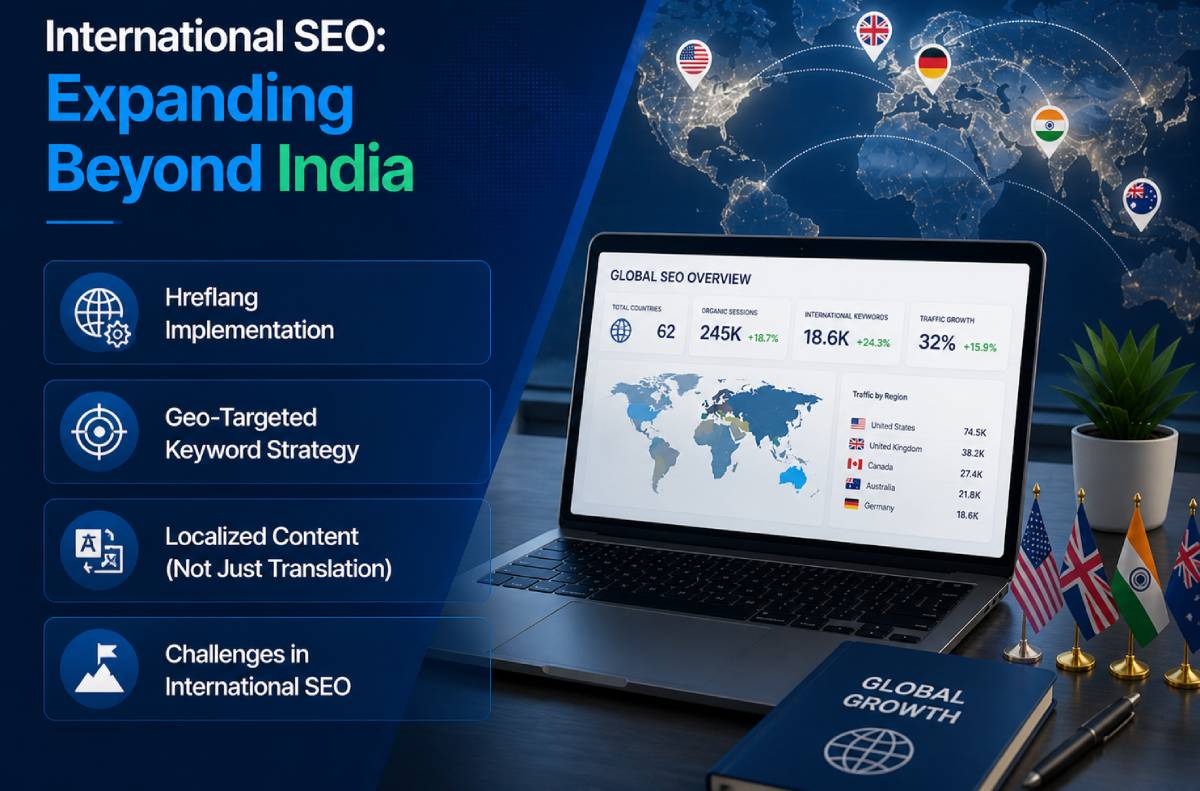
International SEO: Expanding Beyond India
As Indian businesses scale, many quickly realize that growth is no longer limited to domestic markets. Whether it’s SaaS companies targeting the US, ecommerce brands selling in the UAE, or service businesses expanding globally, international visibility becomes a key driver of revenue.
However, expanding globally is not just about translating a website or running ads in another country. Search behavior, competition, language preferences, and user expectations vary significantly across regions. This is where international SEO becomes critical.
Unlike local SEO, international SEO ensures that your website is correctly understood, indexed, and ranked in different countries and languages without creating conflicts or duplication issues.
What Is International SEO?
International SEO is the process of optimizing your website so that search engines can identify:
- Which countries are you targeting
- Which languages is your content written in
- Which version of a page should be shown to which audience
For example, if you have users in India, the UAE, and the US, your website should not show the same generic page to all users. Instead, it should present region-specific versions that align with local search intent.
Without this clarity, search engines may rank the wrong version of your page in the wrong country, leading to poor performance and missed opportunities.
Key Components of International SEO
A successful international SEO strategy requires both technical precision and content localization.
Country Targeting (ccTLDs, Subdomains, Subfolders)
Businesses must decide how to structure their international presence:
- ccTLDs (example: .ae, .us) → strong country signal but higher maintenance
- subdomains (ae.domain.com) → flexible but complex
- subfolders (domain.com/ae/) → easier to manage and widely used
- The choice depends on scale, resources, and long-term strategy.
Hreflang Implementation
Hreflang tags tell search engines which language and region a page is intended for. This prevents duplicate content issues and ensures that users see the correct version of your site.
For example:
- English (India)
- Arabic (UAE)
- English (USA)
Without proper hreflang setup, search engines may show the wrong version, hurting rankings and user experience.
Geo-Targeted Keyword Strategy
Keywords vary significantly across countries, even when the language is the same.
For example:
- “digital marketing services” (India)
- “online marketing agency” (USA)
A one-size-fits-all keyword approach does not work. Each region requires its own keyword research based on local search behavior.
Localized Content (Not Just Translation)
Translation alone is not enough. Content must be localized, meaning it should reflect:
- cultural context
- regional examples
- local user expectations
For instance, pricing, tone, and references may need to change depending on the target audience.
Example Strategy
- India → English + Hindi
- UAE → English + Arabic
- USA → English
This structure ensures that each audience receives content that feels relevant and tailored.
Challenges in International SEO
Expanding globally introduces several complexities:
- duplicate content across regions
- Incorrect hreflang implementation
- overlapping keyword targeting
- technical misconfigurations
These issues can confuse search engines and dilute rankings.
Key Insight:
International SEO is not just about expansion; it’s about precision targeting at scale. When implemented correctly, it allows businesses to grow globally without compromising local performance.
Large-Scale Website Migrations: SEO Without Traffic Loss
Website migrations are among the most critical and risky events in SEO. Whether it’s a domain change, redesign, or platform shift, even small mistakes can lead to significant traffic loss.
Many businesses underestimate this process, assuming that search engines will automatically adapt. In reality, migrations require careful planning, technical execution, and continuous monitoring.
Common Migration Types
Large-scale migrations typically fall into three categories:
- Domain changes (example: olddomain.com → newdomain.com)
- CMS/platform migrations (WordPress → Shopify, custom → headless)
- Website redesigns with structural changes
Each type introduces unique challenges, but all share one common risk: loss of SEO equity.
Risks Involved
If not handled correctly, migrations can result in:
- sudden ranking drops
- loss of organic traffic
- broken internal and external links
- indexing issues
In many cases, businesses lose 30–50% of their traffic after migration due to poor planning.
Migration Framework
A structured approach is essential:
Audit Current Site
- URL Mapping
- Redirect Strategy
- Technical Testing
- Post-Migration Monitoring
Audit Current Site
Before making changes, it’s important to understand what is currently working:
- top-performing pages
- high-ranking keywords
- backlink profile
This ensures that valuable SEO assets are not lost.
URL Mapping
Every old URL must be mapped to a corresponding new URL. Missing this step leads to broken links and lost authority.
Redirect Strategy
301 redirects ensure that search engines and users are directed to the correct pages after migration. This helps preserve rankings and link equity.
Technical Testing
Before going live, the new site should be tested for:
- crawlability
- indexation
- page speed
- mobile usability
Post-Migration Monitoring
After launch, continuous monitoring is critical to identify and fix issues quickly.
Best Practice:
Never migrate a website without an SEO strategy. Migration is not just a development task; it is a business-critical SEO operation.
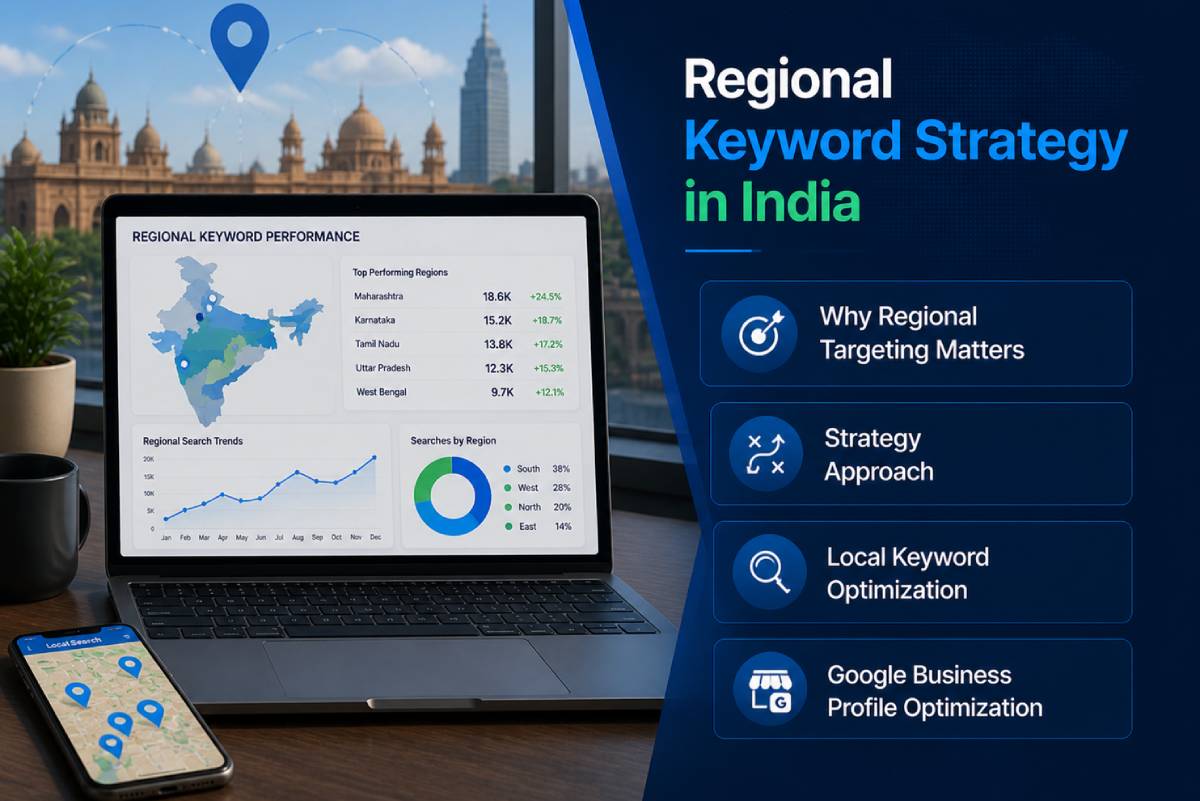
Regional Keyword Strategy in India
India’s diversity makes keyword strategy significantly more complex than in many other markets. Search behavior varies not just by language, but also by region, culture, and local preferences.
Why Regional Targeting Matters
Users in different cities search differently, even when looking for the same service.
For example:
- “digital marketing agency Mumbai”
- “SEO company in Bangalore”
- “marketing services Delhi”
Each query reflects:
- local intent
- geographic preference
- trust in nearby businesses
Ignoring this variation means missing high-intent traffic.
Strategy Approach
A strong regional SEO strategy includes multiple layers:
City-Specific Landing Pages
Creating dedicated pages for major cities helps capture localized search traffic.
Example:
- /seo-services-mumbai
- /seo-services-delhi
These pages should include region-specific content, not just duplicated templates.
Local Keyword Optimization
Keyword research should focus on:
- city-specific queries
- “near me” searches
- localized variations
This ensures alignment with how users actually search.
Google Business Profile Optimization
For local visibility, optimizing your Google Business Profile is essential. It helps businesses appear in:
- Google Maps
- local search results
- “near me” queries
Result: A well-executed regional strategy leads to:
- Higher visibility in local searches
- improved lead quality
- better conversion rates
Technical SEO at Enterprise Scale
Technical SEO becomes significantly more complex at scale. For large websites, even minor technical issues can impact thousands of pages.
Why Technical SEO Matters
Search engines rely on technical signals to:
- crawl your website
- understand content
- index pages correctly
Without a strong technical foundation, even high-quality content may fail to rank.
Key Areas of Technical SEO
Crawlability
Search engines must be able to access all important pages.
Issues like:
- broken links
- Poor internal linking
- blocked resources
It can prevent proper crawling.
Indexation
Not all pages should be indexed. Controlling indexation ensures that only valuable pages appear in search results.
This involves:
- removing duplicate pages
- managing low-quality content
- using canonical tags
Core Web Vitals
User experience is now a ranking factor.
Key metrics include:
- page load speed
- interactivity
- visual stability
Improving these metrics enhances both rankings and user satisfaction.
Structured Data (Schema Markup)
Schema helps search engines understand your content better and can improve visibility through rich results.
Examples include:
- FAQs
- reviews
- product details
Example Impact
Improving page speed from 5 seconds to 2 seconds can:
- reduce bounce rates significantly
- increase user engagement
- improve conversion rates
Key Insight:
At an enterprise level, technical SEO is not optional; it is the foundation of scalable growth.
Content Strategy for Enterprise SEO
Content is the engine that drives organic visibility, but at an enterprise level, it must be structured strategically.
Content Framework
Pillar Pages
Cluster Content
Supporting Blogs
Internal Linking
How It Works
Pillar Pages
These are comprehensive pages targeting broad, high-volume keywords.
Example:
SEO Services
Cluster Content
These are supporting pages that dive deeper into subtopics:
- local SEO
- ecommerce SEO
- technical SEO
Supporting Blogs
Blogs target long-tail keywords and provide detailed insights, helping capture additional traffic.
Internal Linking
Internal links connect all content pieces, distributing authority and improving navigation.
Why This Works
Search engines prioritize websites that demonstrate topical authority. By covering a topic in depth through multiple interconnected pages, businesses signal expertise and relevance.
Result:
- Higher rankings across multiple keywords
- increased organic traffic
- stronger domain authority
SEO ROI Framework
SEO is often misunderstood because businesses measure it using the wrong metrics. Rankings and traffic are important, but they are not the end goal. The real success of SEO lies in its ability to generate measurable business outcomes, leads, customers, and revenue.
Unlike paid advertising, where results are immediate but stop when spending stops, SEO builds long-term compounding value. This makes ROI one of the most important frameworks for evaluating SEO performance.
How SEO ROI Actually Works
SEO operates as a multi-stage growth engine:
Traffic → Engagement → Leads → Conversions → Revenue
Each stage contributes to the outcome. If any stage is weak, for example, high traffic but low conversions, the overall ROI suffers.
Example (Realistic ROI Model)
- Investment: ₹5L/year
- Traffic: 1,00,000/month
- Leads: 3,000/year
- Revenue: ₹50L
- ROI: 10X
This example highlights a key advantage of SEO:
Once rankings are established, traffic continues to grow without proportional increases in cost.
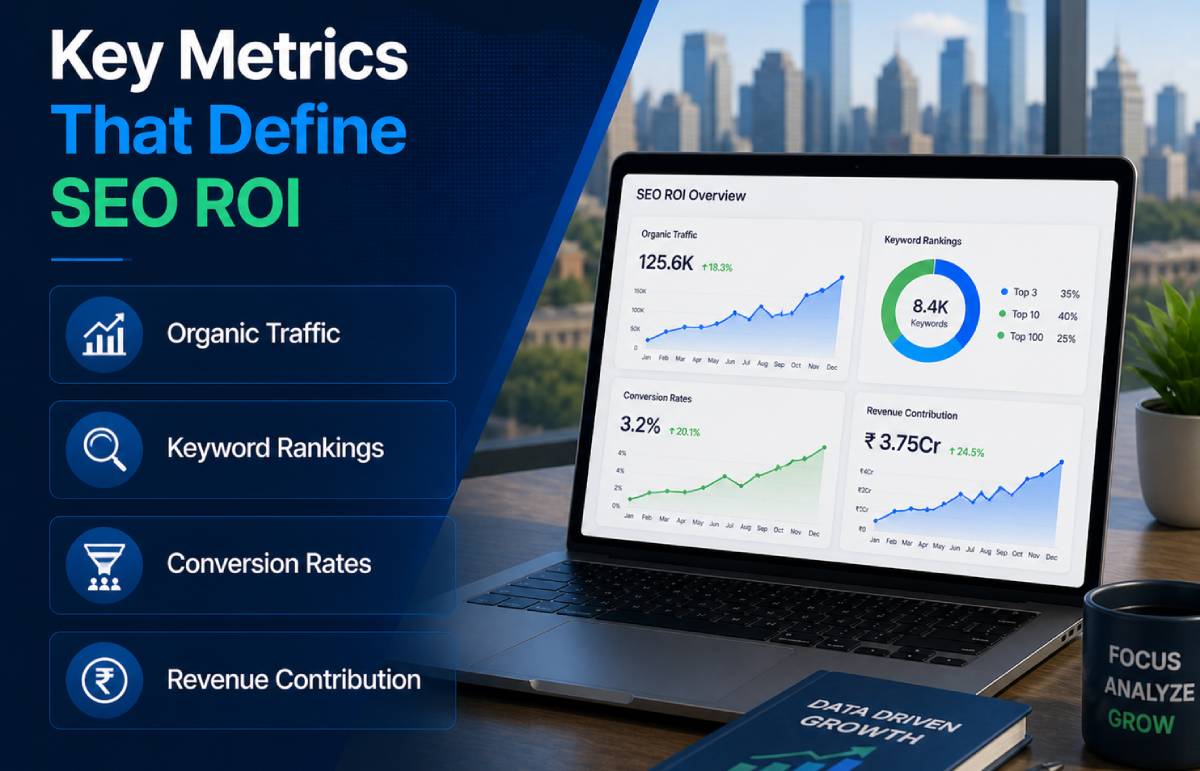
Key Metrics That Define SEO ROI
Organic Traffic
Traffic indicates visibility, but it must be qualified. High traffic from irrelevant keywords does not contribute to ROI.
Keyword Rankings
Rankings matter because they influence visibility, but focusing only on rankings without considering intent can be misleading. Ranking #1 for a low-intent keyword may not drive revenue.
Conversion Rates
Conversion rate optimization is often the missing link in SEO. Improving conversion rates can significantly increase ROI without increasing traffic.
Revenue Contribution
The most important metric is how much revenue SEO generates.
Businesses should track:
- lead-to-customer conversion rate
- average order value
- lifetime customer value
Key Insight:
SEO is not a traffic channel; it is a revenue channel when executed correctly.
How to Choose the Best SEO Services in India
Choosing the right SEO partner is one of the most critical decisions for any business. With hundreds of agencies offering similar promises, the challenge is not finding an agency; it’s finding the right one.
1. Evaluate Experience
Experience goes beyond years in business. What matters is relevance and proven outcomes.
Look for:
- experience in your industry
- case studies with measurable results
- ability to handle projects similar to your scale
An agency that has worked with enterprise clients will understand challenges like large-scale optimization, technical complexity, and cross-functional coordination.
2. Check Technical Capability
Technical SEO is where most agencies fall short. Many focus on content and backlinks but lack the expertise to handle complex technical issues.
Ensure the agency can manage:
- large and dynamic websites
- platform migrations without traffic loss
- multilingual and international SEO setups
Technical capability becomes even more important as your website grows.
3. Transparency and Reporting
A reliable SEO partner provides complete visibility into their work and performance.
You should expect:
- clear monthly reports
- dashboards showing traffic, rankings, and conversions
- breakdown of activities performed
Lack of transparency is often a red flag. If an agency cannot explain what they are doing and why, it’s difficult to trust their process.
4. Strategy-First Approach
Many agencies jump directly into execution without a clear strategy. This leads to scattered efforts and inconsistent results.
Avoid agencies that:
- promise instant rankings
- Focus only on backlinks
- offer generic, one-size-fits-all solutions
A strong SEO partner will start with research, define a roadmap, and align efforts with your business goals.
Key Insight:
The best SEO services in India are not defined by price; they are defined by strategy, execution, and measurable outcomes.
How Ideamagix Delivers Enterprise SEO Solutions
Ideamagix approaches SEO as a growth system, not a set of isolated activities. The focus is on building scalable strategies that drive consistent and measurable results over time.
Key Capabilities
Ideamagix offers enterprise-level SEO solutions designed to handle complex and high-growth environments.
Multilingual SEO
Reaching diverse audiences across India requires more than translation. Ideamagix develops localized strategies that align with regional search behavior and language preferences.
International SEO
For businesses targeting global markets, Ideamagix implements structured international SEO frameworks, ensuring correct targeting across countries without duplication or ranking conflicts.
Enterprise Technical SEO
From crawl optimization to large-scale indexing and Core Web Vitals improvements, Ideamagix ensures that technical foundations support long-term growth.
Content-Driven Growth
Content strategies are built using pillar-cluster frameworks that establish topical authority and drive consistent organic traffic.
Approach
Ideamagix follows a structured process:
Research → Strategy → Execution → Optimization → Scaling
Each stage is designed to build on the previous one, ensuring that SEO efforts are aligned with business outcomes.
Result-Oriented Focus
Instead of focusing only on rankings or traffic, the approach is centered around:
Traffic → Leads → Revenue
This ensures that SEO contributes directly to business growth, not just visibility.
Soft CTA:
Businesses looking to scale sustainably with professional SEO services in India can partner with Ideamagix to build a performance-driven growth system.
FAQs
What are professional SEO services?
Professional SEO services involve a comprehensive and strategic approach to improving a website’s visibility in search engines. Unlike basic SEO, which focuses on isolated tasks like keyword placement or backlink building, professional SEO integrates technical optimization, content strategy, and data analysis. It is designed to scale with the business, ensuring consistent growth over time. These services also focus on aligning SEO efforts with business goals such as lead generation and revenue. For enterprise businesses, this includes handling complex site structures, multilingual targeting, and large-scale optimization. Ultimately, professional SEO is about building a sustainable growth system rather than achieving short-term ranking gains.
How much do SEO services cost in India?
SEO costs in India vary widely depending on the scope, competition, and scale of the project. Small businesses may invest between ₹15,000 and ₹50,000 per month for basic SEO services, while mid-sized companies typically spend ₹50,000 to ₹2,00,000 per month. Enterprise SEO services, which involve large-scale optimization, multilingual strategies, and advanced technical work, can range from ₹2,00,000 to ₹5,00,000+ per month. Pricing also depends on factors like industry competition, website size, and content requirements. It is important to view SEO as an investment rather than a cost, as the returns can compound significantly over time. Choosing the cheapest option often leads to poor results or even long-term damage to rankings.
How long does SEO take to show results?
SEO is a long-term strategy, and the timeline for results depends on factors such as competition, website authority, and the quality of execution. Most businesses start seeing initial improvements within 3–6 months, especially for low to medium competition keywords. However, achieving strong rankings for competitive keywords typically takes 6–12 months or more. Enterprise SEO projects may take even longer due to scale and complexity. The key is consistency; SEO requires continuous optimization, content creation, and performance tracking. While it may take time to build momentum, the results are sustainable and often deliver higher ROI compared to short-term marketing channels.
Is SEO better than paid advertising?
SEO and paid advertising serve different purposes and work best when used together. Paid ads provide immediate visibility and quick results, making them ideal for short-term campaigns. SEO, on the other hand, focuses on long-term growth by building organic visibility and authority. Over time, SEO becomes more cost-effective because it continues to generate traffic without ongoing ad spend. Businesses that rely only on paid ads often face high customer acquisition costs, while those investing in SEO can reduce dependency on paid channels. The most effective strategy is to combine both—using paid ads for quick wins and SEO for sustainable growth.
Can SEO guarantee results?
No legitimate SEO agency can guarantee specific rankings, especially in competitive markets. Search engine algorithms are constantly evolving, and rankings depend on multiple factors beyond an agency’s control. However, professional SEO services can guarantee a structured approach, consistent effort, and measurable improvements over time. Instead of promising instant results, reliable agencies focus on building long-term growth through best practices. Businesses should be cautious of agencies that guarantee “#1 rankings” in a short period, as this often involves risky or black-hat techniques. The right approach is to focus on sustainable performance rather than unrealistic promises.
What industries benefit the most from professional SEO services in India?
Almost every industry can benefit from SEO, but the impact is especially significant in sectors with high online competition. Industries such as e-commerce, real estate, healthcare, finance, and SaaS rely heavily on search visibility to generate leads and sales. For example, an e-commerce business can drive consistent revenue through organic product searches, while a healthcare provider can attract patients through local SEO. B2B companies also benefit by generating high-quality leads through informational and intent-driven content. The key is aligning SEO strategy with industry-specific user behavior and search intent. Businesses that invest in tailored SEO strategies often outperform competitors who rely on generic approaches.
What is the difference between local SEO and enterprise SEO?
Local SEO focuses on improving visibility for location-based searches, such as “SEO services near me” or city-specific queries. It involves optimizing Google Business Profiles, local citations, and geo-targeted content. Enterprise SEO, on the other hand, is designed for large-scale websites with thousands of pages and multiple regions or languages. It involves advanced technical optimization, content strategy, and scalability frameworks. While local SEO is ideal for small businesses targeting specific areas, enterprise SEO is essential for companies aiming for national or global reach. Both require different strategies and levels of complexity.
Why is technical SEO important for large websites?
Technical SEO ensures that search engines can efficiently crawl, index, and understand a website. For large websites, even small technical issues can impact thousands of pages, leading to significant traffic loss. Problems like slow page speed, broken links, or poor site architecture can reduce visibility and rankings. Technical SEO also plays a crucial role in improving user experience, which directly affects engagement and conversions. Without a strong technical foundation, other SEO efforts, such as content and link building, may not deliver results. This is why enterprise SEO places a strong emphasis on technical optimization.
How do I measure the success of SEO campaigns?
SEO success should be measured using a combination of performance and business metrics. Key indicators include organic traffic growth, keyword rankings, and user engagement metrics such as bounce rate and time on site. However, the most important metrics are leads, conversions, and revenue generated through organic channels. Businesses should also track cost per acquisition (CPA) and return on investment (ROI) to understand the financial impact of SEO. Using tools like Google Analytics and Search Console helps provide detailed insights into performance. A successful SEO campaign is one that consistently contributes to business growth.
Should I hire an in-house SEO team or an agency?
The choice between an in-house team and an agency depends on your business needs and resources. In-house teams offer better control and alignment with internal processes but can be expensive to build and maintain. Agencies provide access to a diverse team of experts, advanced tools, and proven strategies, often at a lower cost. For most businesses, especially startups and SMEs, working with an agency is more efficient and scalable. Enterprise companies may benefit from a hybrid approach, combining in-house expertise with external support. The key is ensuring that the chosen approach aligns with your growth goals and capabilities.