
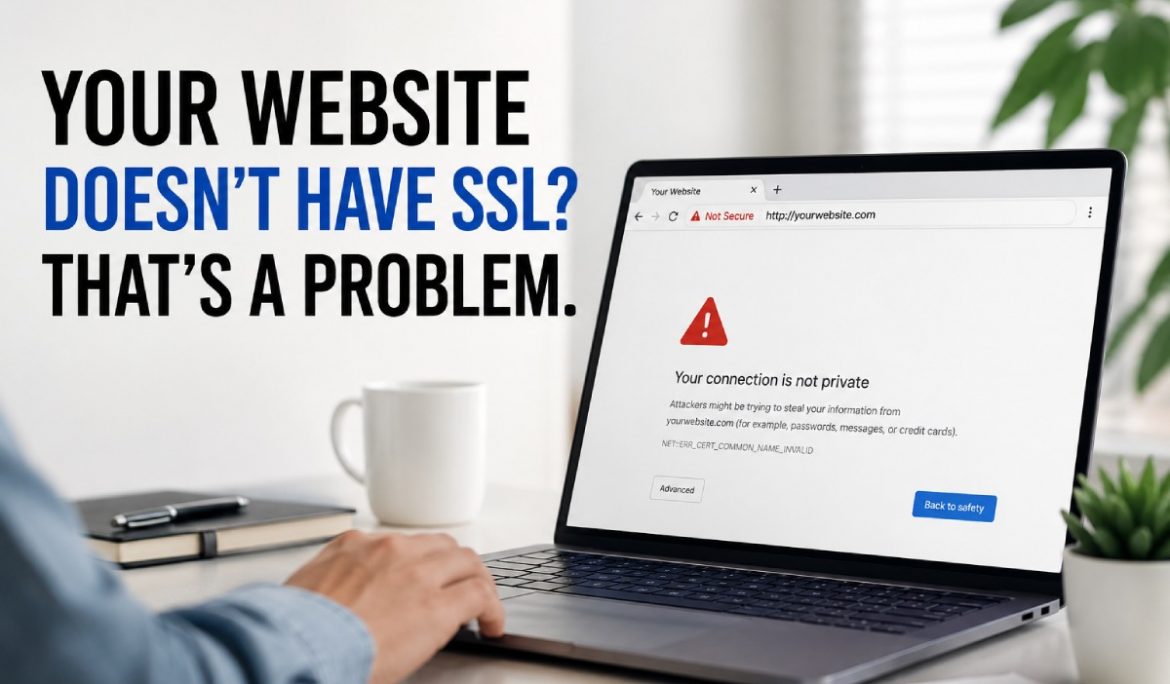
Let me be blunt: if your website still shows http:// instead of https://, you’re quietly losing visitors every single day. Not dramatically. They just leave. And you’ll never know why. An active SSL certificate instantly improves trust, credibility, and visitor confidence.
Here’s what’s actually going on.
So What Even Is SSL?
SSL (Secure Sockets Layer) is basically a digital lock for your website. When it’s installed, two things happen: your address changes from http:// to https://, and a padlock icon appears in the browser bar. That little padlock? People notice it more than you think.
Think of it this way: without SSL, you’re sending a valuable package in a clear box for anyone to see inside. With SSL, it’s locked in a tamper-proof safe that only the recipient can open. Businesses should purchase SSL certificate solutions, ensuring every website security certificate meets modern browser trust standards.
The Real Reasons You Need It
A reliable website security certificate combined with website hosting with SSL helps businesses improve trust, while tools that get SSL certificate from URL simplify verification and monitoring.
1. Chrome will call you out publicly
Modern browsers label sites without HTTPS as “Not Secure,” warning users before they even proceed. That warning shows up before someone fills out your contact form, before they buy anything, before they even scroll. First impressions are everything, and yours just said danger.
2. Google is watching
Google has confirmed that HTTPS is a ranking factor. Sites without SSL can be marked as “Not Secure,” scaring away visitors. You can spend thousands on SEO and ads, but skip SSL, and you’re swimming upstream.
3. It’s not just for shops
A lot of people still think SSL is only for e-commerce. Wrong. If your website collects any information from customers, including emails, addresses, or names, you must have an SSL certificate to keep their data secure. Even a basic newsletter signup counts.
4. Legal exposure is real
If there’s a security breach and customer data is compromised because your website doesn’t have an SSL certificate, you may face legal consequences. That’s a lawsuit over something that costs almost nothing to fix. Hard pass.
5. Certificates are expiring faster now
Here’s something most people don’t know: By 2029, certificates will need to be renewed approximately every 47 days, a move designed to tighten security and reduce risk. That means manual management is becoming unsustainable. Automate it, or use a host that handles it for you.
Businesses that buy SSL certificate for website protection alongside reliable website hosting with SSL can easily get an SSL certificate from URL details for ongoing security management.
The Good News
Getting SSL is easier and more affordable than ever. The most popular free option is Let’s Encrypt, a non-profit backed by Google, Meta, and Mozilla, and their certificates provide the same level of encryption as most paid ones. Most hosts now offer it in one click.
There’s genuinely no good reason not to have it at this point. Today, businesses can easily purchase SSL certificate solutions with website hosting with SSL for stronger website security certificate protection and long-term customer trust.
SSL isn’t a “security upgrade.” It’s the baseline. As of March 2025, 99% of pages loaded in Chrome were over HTTPS. If your site is in the 1%, your visitors already know, even if you don’t.
Go check your URL bar right now. If you need help with your domain and SSL, do not hesitate to reach out to ideamagix.